The Hidden Technology That Makes Our Homes and Workplaces Comfortable
Introduction
Imagine coming home after spending a long day outside on a hot afternoon. The moment you enter your room, you switch on the air conditioner, sit back, and enjoy the cool air. It feels like a small comfort, but have you ever stopped to think about what actually happens behind that cooling experience?
There is more to it than simply pressing a button on a remote.
The same thing happens during colder weather when heating systems keep indoor spaces warm, or in offices where fresh air circulation makes long working hours more comfortable. All these everyday comforts are connected to something called HVAC.
Although the name HVAC sounds technical, the basic idea is quite simple. It is about creating an indoor environment where people can feel comfortable regardless of what the weather is like outside.
Today, HVAC systems are found almost everywhere. From small apartments and family homes to shopping centres, hospitals, hotels, and large office buildings, they have become an important part of modern construction.
But what makes these systems so useful? How do they work? And why should building owners pay attention to their maintenance?
Let’s explore HVAC technology in a simple way and understand what happens behind the scenes.
1. What Exactly Is an HVAC System?
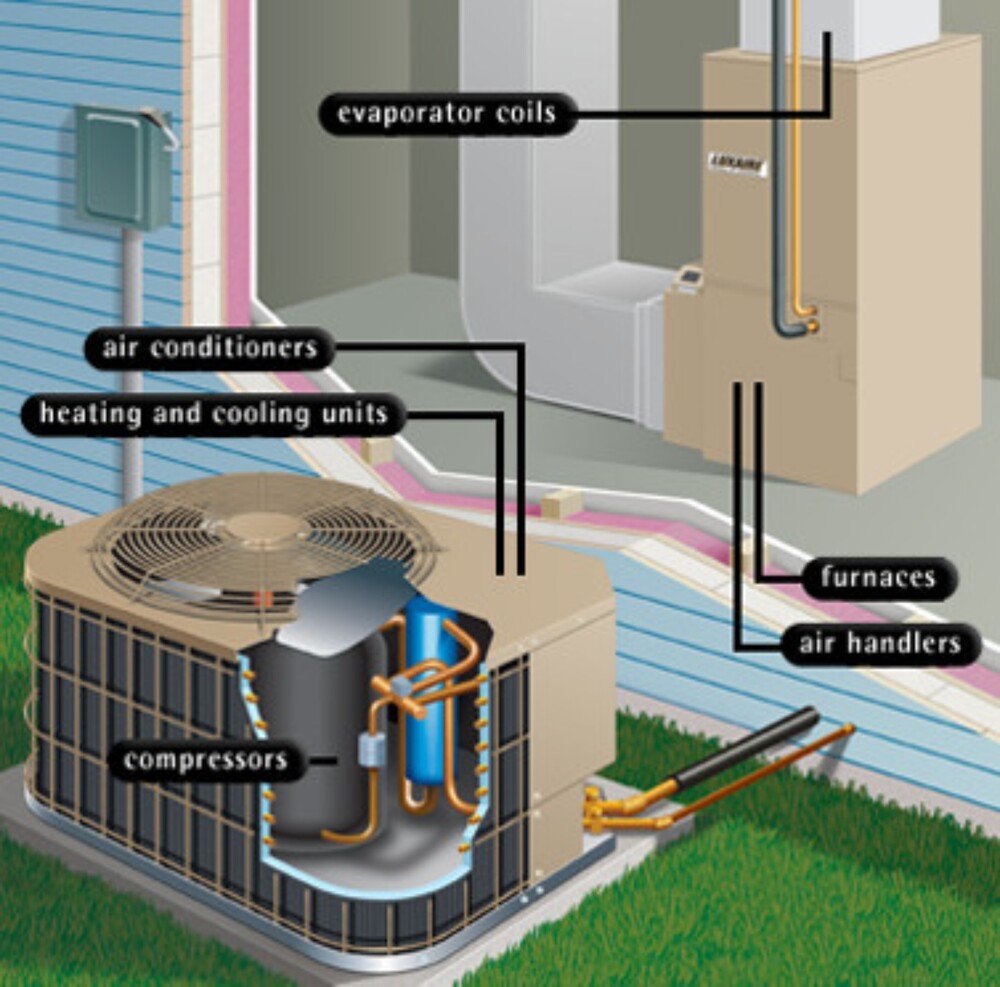
An HVAC system is designed to control the temperature, airflow, and certain aspects of air quality inside a building.
Think about the different conditions people experience throughout the year. During summer, indoor spaces can become uncomfortably warm. During winter, rooms may become too cold. Even when the temperature is pleasant, a room with poor ventilation can feel stuffy after people spend several hours inside.
An HVAC system helps manage these conditions.
It brings together three important functions:
Heating: When the weather becomes cold, heating equipment helps increase the indoor temperature and keeps rooms comfortable.
Ventilation: It helps move air through a building, bringing in outdoor air where required and removing stale indoor air.
Air Conditioning: It removes unwanted heat from indoor spaces and provides cooling when temperatures rise.
These three functions work together to make indoor environments more comfortable.
However, not every HVAC system performs all three functions in exactly the same way. Some systems provide heating and cooling, while others are designed mainly for ventilation or specific temperature-control requirements.
The equipment used depends on the building, its purpose, local climate, and the needs of the people using it.
2. How Does an HVAC System Actually Work?
You do not need an engineering background to understand how an HVAC system works. The easiest way is to look at what happens when the system is switched on.
Let’s take a normal air conditioning system as an example.
When a room becomes warm, the thermostat detects the temperature and signals the cooling system to operate. The indoor unit starts circulating room air across a cooling coil.
Inside this coil, a special substance called refrigerant absorbs heat from the indoor air.
The refrigerant then carries that heat towards the outdoor unit. The compressor helps move the refrigerant through the system, and the condenser releases the collected heat outside.
The indoor unit then sends cooler air back into the room.
This process continues until the room reaches the temperature selected on the thermostat.
Heating works differently depending on the equipment. In a heat pump system, for example, the direction of heat transfer can be reversed. Instead of removing indoor heat, the system collects heat from outside and transfers it indoors.
Ventilation is another important part of the process. Depending on the building design, fans, ducts, and ventilation equipment help move air between indoor and outdoor spaces.
So, while you may only notice the temperature changing, several components are working together to make that happen.
3. Understanding the Main Parts of an HVAC System
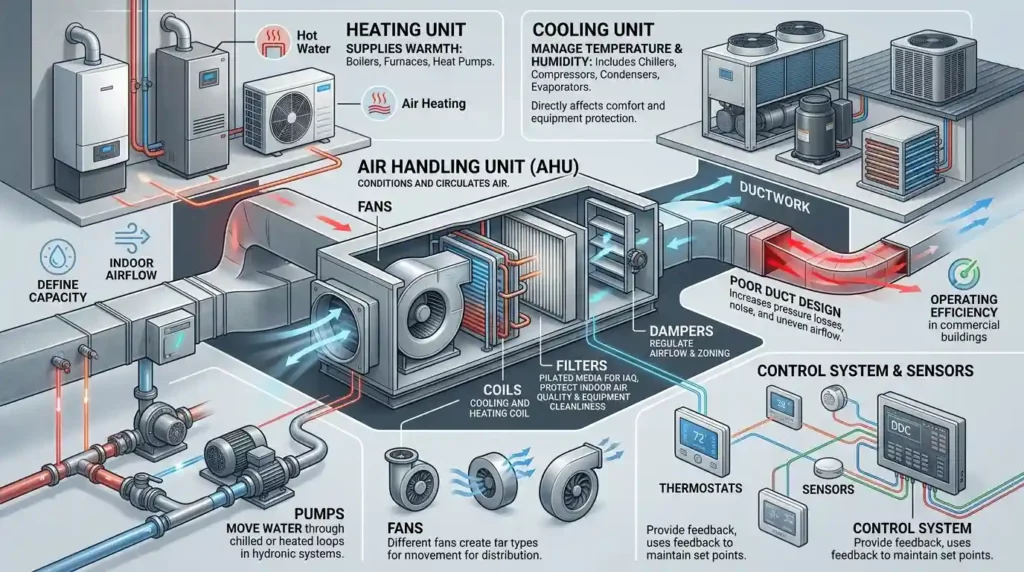
An HVAC system may look like one piece of equipment from the outside, but it actually contains several parts. Each component has a particular responsibility.
Let’s understand the important ones.
Thermostat: The Temperature Controller
The thermostat is the part that allows you to control the indoor temperature.
For example, when you set your air conditioner to 24°C, the thermostat monitors the room temperature and helps decide when the cooling equipment should operate.
Some modern thermostats offer additional features such as automatic schedules, remote access, and smart temperature controls.
Compressor: The Heart of the Cooling Cycle
The compressor is an important component in a conventional refrigeration-based air conditioning system.Its job is to increase the pressure of the refrigerant and help circulate it through the system.
When the compressor is working properly, the refrigeration cycle can continue and the air conditioner can remove heat from indoor spaces.
Evaporator Coil: Where Indoor Cooling Begins
The evaporator coil is generally located inside the indoor unit.
Warm air from the room passes over this coil. The refrigerant inside absorbs heat from the air, allowing cooler air to return to the room.
This is one of the main stages responsible for the cooling effect people experience.
Condenser Coil: Sending Heat Outside
The condenser coil is usually found in the outdoor unit.After collecting heat indoors, the refrigerant travels to the condenser, where that heat is released into the outside air.
This explains why you feel warm air coming from the outdoor unit while an air conditioner is operating.
Air Filters: Small Parts That Make a Difference
Air filters are easy to overlook, but they have an important job.
They capture dust and certain airborne particles before air moves through the system. Over time, these filters collect dirt and need cleaning or replacement.
A clogged filter can restrict airflow and make the system work harder than necessary.
Ducts and Fans: Moving Air Around the Building
Ducts are passages used to distribute conditioned air throughout a building.
Fans help move air through these passages and across different components.
In a large office or commercial building, properly designed ductwork is especially important because air needs to reach several rooms and areas.
4. Different Types of HVAC Systems Used Today
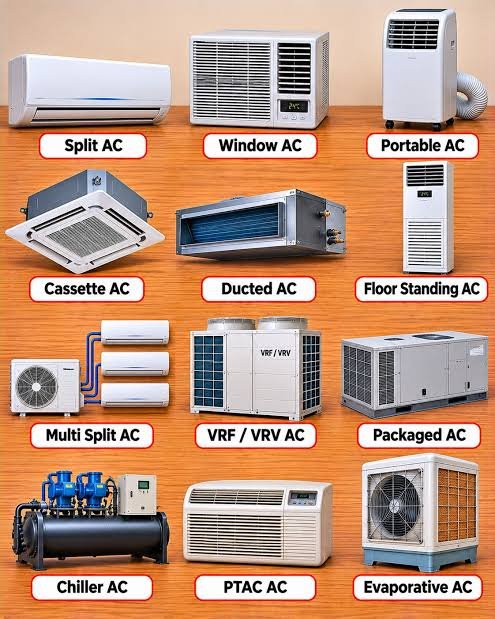
Walk into a small apartment, a hotel, and a shopping mall, and you will probably notice that their heating and cooling arrangements are very different.
That is because HVAC requirements change according to the size and purpose of a building.
Here are some commonly used systems.
Split Air Conditioning System
Split systems are widely used in homes and small offices.
They usually have two separate units. One is installed inside the room, and the other is placed outside the building.
The indoor unit handles room air, while the outdoor unit contains important components involved in the refrigeration process.
One reason people prefer split systems is that they can provide cooling without requiring a large network of air ducts.
They are particularly useful when cooling individual rooms.
Central HVAC System
Imagine a large office building where every room needs cooling. Installing a separate air conditioner in every room may not always be the most practical solution.
This is where central HVAC systems become useful.
These systems use central equipment to provide heating or cooling to multiple areas. Ductwork or other distribution arrangements carry conditioned air throughout the building.
Central systems are commonly found in hotels, hospitals, shopping centres, and large commercial properties.
They also allow building operators to manage indoor conditions through centralized controls.
Ductless Mini-Split System
Some buildings do not have enough space for traditional ductwork.
A ductless mini-split system offers another option.
It connects an outdoor unit to one or more indoor units without needing conventional air ducts.
This arrangement can be useful for home extensions, individual rooms, smaller offices, and renovated buildings.
Depending on the system design, different rooms can have separate temperature settings.
Packaged HVAC System
A packaged HVAC system brings several major heating and cooling components together inside one cabinet.
It is often installed outdoors or on building rooftops.
These systems are commonly used in commercial spaces where a centralized packaged arrangement is suitable for the building layout.
Heat Pump System
A heat pump is an interesting type of HVAC equipment because it can provide both heating and cooling.
During summer, it removes heat from indoor spaces and releases it outdoors.
During colder weather, it works in the opposite direction, transferring available heat from outside into the building.
Since it transfers heat instead of generating it through conventional resistance heating, it can offer good energy efficiency under suitable operating conditions.
5. How Can You Reduce HVAC Electricity Consumption?
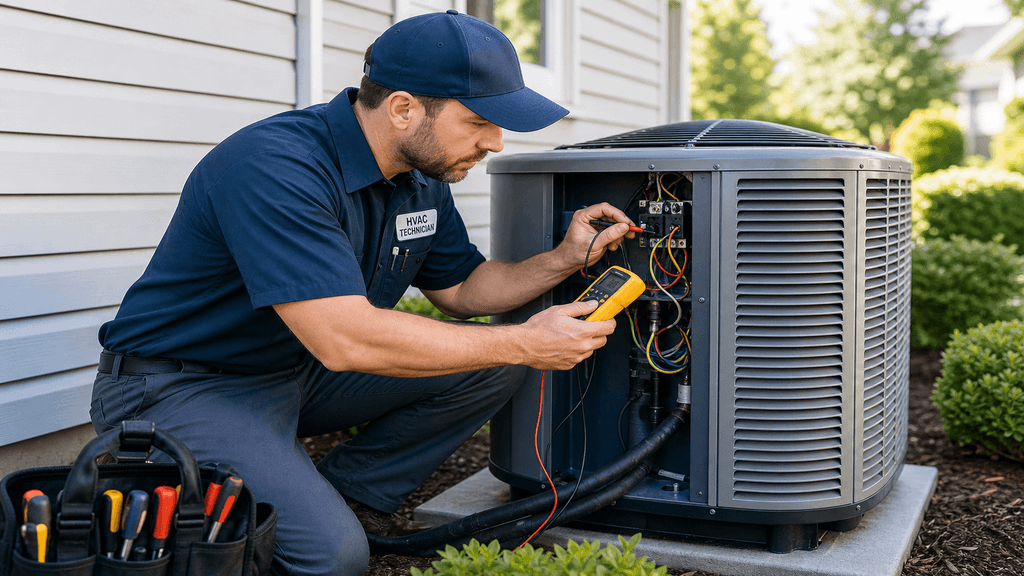
Electricity costs are a concern for many homeowners and business owners.
Heating and cooling equipment can use a considerable amount of energy, especially when it operates for long hours.
Fortunately, a few everyday habits can help reduce unnecessary energy use.
- Avoid setting the air conditioner to an extremely low temperature when a comfortable setting is enough.
- Keep doors and windows closed while cooling the room.
- Use curtains or blinds to reduce direct sunlight.
- Clean filters regularly to support proper airflow.
- Choose equipment with suitable energy-efficiency ratings.
- Make sure the system is correctly sized for the building.
- Use ceiling fans when appropriate to improve air movement.
- Arrange regular maintenance to identify problems before they affect performance.
Another important point is insulation.
A poorly insulated room can lose cooled or heated air more easily. Improving insulation and sealing unwanted gaps can help the HVAC system maintain the desired indoor temperature.
6. What Does the Future Look Like for HVAC Systems?
HVAC technology is changing as people become more interested in energy savings, smart homes, and better indoor environments.
Today’s systems are not limited to basic temperature controls.
Smart thermostats, for example, allow users to manage indoor temperatures through mobile applications. Some can follow programmed schedules and adjust settings according to usage patterns.
Variable-speed compressors and fans can change their operating speed based on the actual cooling or heating demand. This can help improve comfort and efficiency compared with equipment that operates only at fixed speeds.
Building management systems are also becoming more common in larger properties. They allow facility teams to monitor HVAC equipment, temperatures, and energy consumption from a central location.
Another growing area is indoor air quality. Building owners are paying more attention to ventilation, filtration, and moisture management because people spend a large part of their day indoors.
As these technologies continue to develop, HVAC systems are likely to become more intelligent and better suited to individual building requirements.
Conclusion
We often take indoor comfort for granted. We enter a room, switch on the air conditioner, and expect the temperature to change. But behind that simple action is a complete system of components working together.
HVAC systems do much more than keep buildings cool or warm. They help manage airflow, support indoor air quality, control humidity, and create comfortable spaces for everyday living.
Whether you own a small apartment, manage an office, or operate a large commercial building, understanding the basics of HVAC can help you make better decisions about equipment selection and maintenance.
One thing worth remembering is that even the best HVAC equipment needs proper installation and regular care. Paying attention to small issues, cleaning filters, and arranging professional servicing can make a real difference over time.
A comfortable indoor environment does not happen by accident. It comes from having the right system, using it wisely, and taking care of it when it needs attention.